
 |
 |
|
|
|
|
|

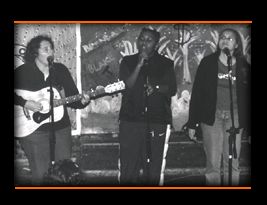
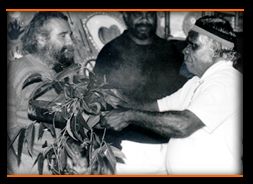
May 1999 Recruitment Local youth centres were visited and youth workers briefed on the aims of the project. Local community leaders from the indigenous community gave their support to the project. Drama workers John Blair, Jacqueline Millane and actor Leah Purcell agreed to lend their services and the "Road" project began to take shape. June 8th saw the "Road" project proper kick off at the Settlement Neighbourhood Centre with a smoking ceremony and traditional welcome to the country from Uncle Max. Over 100 people came to the launch which included a performance from singing group the Stiff Gins.
The
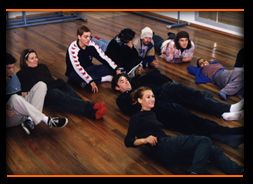
Workshops The workshops consisted of some traditional drama warmups and games. Improvisations and short scripts were performed and the group tried their hands at different ways to create stories. These included writing short pieces around a theme and writing one line chain letters. Other methods such as cutting and pasting parts of stories at random were also tried.
Some of the exercises were performed to camera and the group then watched back their efforts on screen. In the course of the workshop period the group were encouraged to try their hand at various auditions and job opportunities that arose and they were helped in this by the drama coaches and facilitators. We watched videos and talked about Leah Purcell's work and her experiences as an aspiring black actor. There were also visits from other performers such as Sebastian Goldspink who gave the group the benefits of his experience. 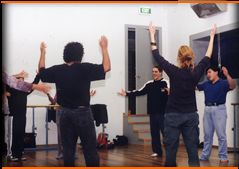 Themes
and Protocols Working around the theme of "Sorry Stories" and "multiculturalism" was problematic. There was agreement that the group did not want to stereotype indigenous people but there was also a determination not to shy away from the reality of people's lives. Another issue was not wanting to be portrayed as victims. August Material
from workshops: Stories
from further afield September
Matt and Catriona would write up some ideas away from the group and then take them back to the workshops where they would be performed and fine-tuned by the young people. We took a break from the workshops at the end of September and a version of the script was presented to SBS. They were positive and it seemed like we might put the final piece of the jigsaw together and move on to the production phase of the project. October
We meet up again as a group and distribute the first draft of the script. The group work on different roles and we begin to look at locations for the various scenes - taking photos late at night and at dawn. The film starts to become a reality for the participants as we start to look at the location photos and talk about the "look" of the film. We begin to think about who will take the various crewing roles for the film's production. Catriona starts to cast the characters in the film. She is also re-writing the script and is currently on draft number three. We have a number of ideas for locations but we need to tie down specific places. We are looking at concrete carparks, desolate motorway flyovers, dirty city streets, deadends in darkened alleyways. Some of the scenes are clear to her but others remain a mystery. She has a good idea of what the feel of the film will be and has even locked in some of the music -in a brainwave she will use a soothing ballad from aging indigenous crooner Jimmy Little to form the aural backdrop for the film's pivotal violent confrontation between the two anti-heroes and the racist taxi - driver.
November December
- Pre-production Cinematographer Alan Collins comes on board fresh from another shoot and we have just a week to check through and test the equipment. The art department have arranged for a cab company to "dress" a Ford Falcon as a taxi so that it looks like the real thing. The car is collected from the hire company and within two hours it emerges looking so much like the real thing that the driver is hailed three times on the way to the first location. Props are collected and costumes fitted. The actors go through their paces for the last time. We are ready to roll! The
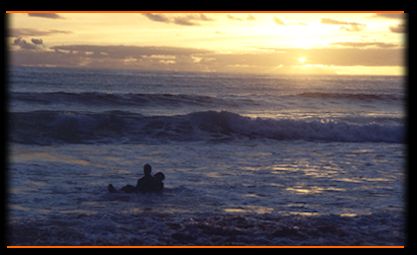
Shoot We shoot outside Central Station for three nights. All the shoots are 6pm to 6 am so it's a tough schedule - no sleep till Bondi! We do the fight scene but keep getting interrupted by real cabbies who jump out of their cars because they think there's an actual fight going on. Then the police stop because they've had a report of an assault. We explain we are making a film. Our makeup people get to work on the characters and bloody them up. They do a very good job because the next visit we get is from an ambulance team in search of the injured parties they have been told are there. One night shoot is in Newtown and some passer-by walks off with a generator the size of a donkey and an enormous spotlight. We catch up with the thief and retrieve the goods. The final night shoot is at a beach north of Sydney. It's the biggest full moon in 130 years and it looks great on film. After the shoot comes the traditional "wrap" party but we are so tired most of us sleep through it.
January
2000 Post -Production We sync up the pictures to the sound and the story emerges from the celluloid. Jimmy Little's music sounds great and composer Steve Francis has put together a blistering soundtrack. March
2000 We plan a screening for participants and the Redfern community and the crew at a major city cinema. This is the premiere and we are going to roll out the red carpet! |

 |
 |
|
|
|
|
|